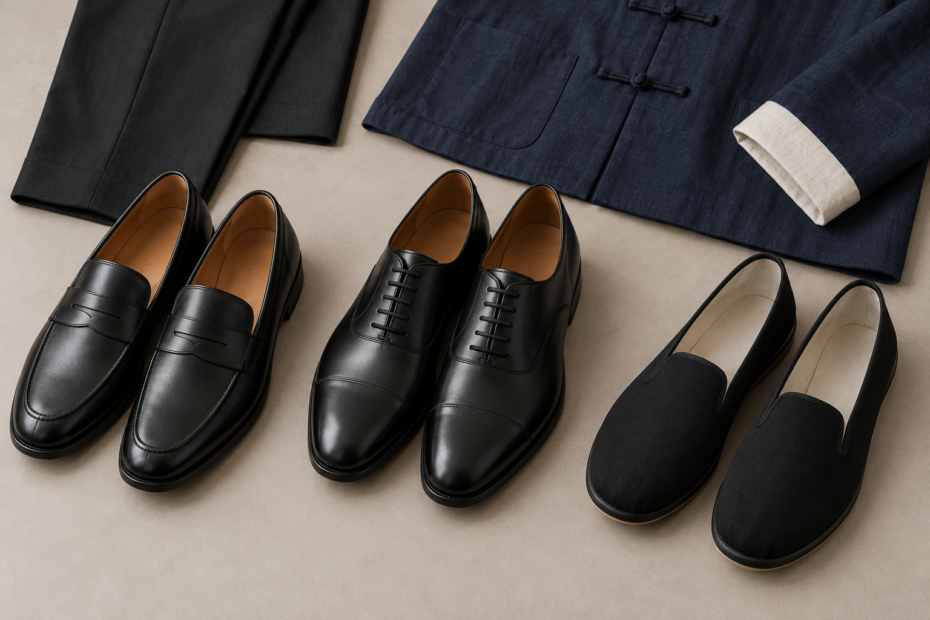
Dress shoes are the safest choice for a formal Tang suit, loafers create a lighter modern look, and cloth shoes suit selected cultural, casual, or performance contexts. The best pair depends on the event, trouser shape, hem length, floor surface, comfort, and the specific garment—not on one rule for every Tang suit.
Choose the occasion before the shoe
A wedding banquet, business dinner, cultural program, casual celebration, and martial arts demonstration require different levels of formality and movement. Confirm the dress code, venue, weather, and how long the wearer will stand or walk.
The jacket also matters. Structured brocade and tailored trousers usually call for more polished footwear than a soft casual Tang shirt.
When dress shoes work best
Black leather lace-ups provide a clear formal foundation for black, charcoal, navy, burgundy, and patterned Tang jackets. Their structured shape supports tailored trousers and a crisp standing collar.
Choose a restrained toe and minimal decoration so the shoes do not compete with frog closures or embroidery. Polish level should match the event and the jacket’s surface rather than becoming the brightest part of the outfit.
When loafers work best
Loafers make a Tang suit feel contemporary and slightly less formal. They work well with straight or gently tapered trousers at a wedding reception, dinner, gallery event, or smart-casual gathering when the dress code allows.
A clean black loafer is versatile. Dark brown can work with navy, charcoal, or cream trousers, but check the complete palette. Heavy hardware or oversized soles may distract from the jacket.
When cloth shoes may work
Simple black cloth slip-ons can support a relaxed cultural presentation, certain performances, or a casual outfit. Their low profile keeps attention on the garment and may work with fuller trousers.
“Traditional cloth shoe” covers many constructions and regional associations. Do not assume every slip-on is historically correct or suitable for a specific ceremony. Confirm context with organizers or knowledgeable participants.
Compare formality
Lace-up dress shoes generally read as most formal, loafers as moderately formal, and cloth shoes as context-dependent. A high-quality cloth shoe may look deliberate in one event and underdressed in another.
Judge the entire outfit. Trouser fabric, jacket structure, accessories, and venue can raise or lower the apparent formality of the same shoe.
Match trouser width and hem
Tailored trousers with a controlled break suit dress shoes and loafers. Fuller straight trousers can balance low-profile cloth shoes. An excessively wide hem may swallow a slim shoe, while a narrow cropped trouser can expose more of the shoe than intended.
Complete hemming with the final pair because sole height changes where the trouser rests.
Consider comfort and fit
Shoe length, width, heel hold, toe room, arch support, and cushioning should suit the wearer. Break in footwear before the event rather than expecting it to soften during hours of standing.
Cloth uppers may feel flexible but do not automatically provide support. Dress shoes may look formal but become distracting if they pinch or slip.
Check traction and the venue floor
Polished floors, outdoor paths, wet entrances, stages, and dance floors create different traction needs. Inspect the sole and rehearse turns or steps on a similar surface. Venue and instructor rules take priority for performance use.
Never choose a smooth sole solely for appearance when slipping risk is present.
Coordinate color
Black is the easiest option with most Tang suits. Dark brown can soften navy or cream combinations, while a matching cloth shoe creates a quiet line with black trousers. Avoid introducing a bright shoe color unless it is part of a deliberate event palette.
Exact matching is not necessary, but undertones should not clash under daylight or flash.
Use socks intentionally
For formal outfits, socks should usually connect trousers and shoes without creating an exposed strip of unrelated color when seated. With loafers or cropped trousers, the ankle becomes more visible and needs deliberate treatment.
Performance and cloth-shoe contexts may have specific requirements. Follow the event or instructor’s guidance.
Three reliable combinations
- Formal wedding: structured Tang jacket, black tailored trousers, polished black lace-ups.
- Modern dinner: navy or black Tang jacket, charcoal trousers, simple black loafers.
- Relaxed cultural event: soft Tang shirt, straight black trousers, plain cloth shoes when appropriate.
Final shoe test
- Wear the full outfit and intended socks.
- Check the trouser break from front and side.
- Walk, sit, use stairs, and turn.
- Test the venue surface when possible.
- Photograph the outfit in event lighting.
- Carry only an approved backup pair if needed.
Compare the formality of a detailed dragon-embroidery Tang suit with a softer bamboo-leaf casual Tang shirt. Browse the Panda-Tang shop, then visit Panda-Tang to verify measurements, materials, care, availability, returns, and delivery.
 English
 Français