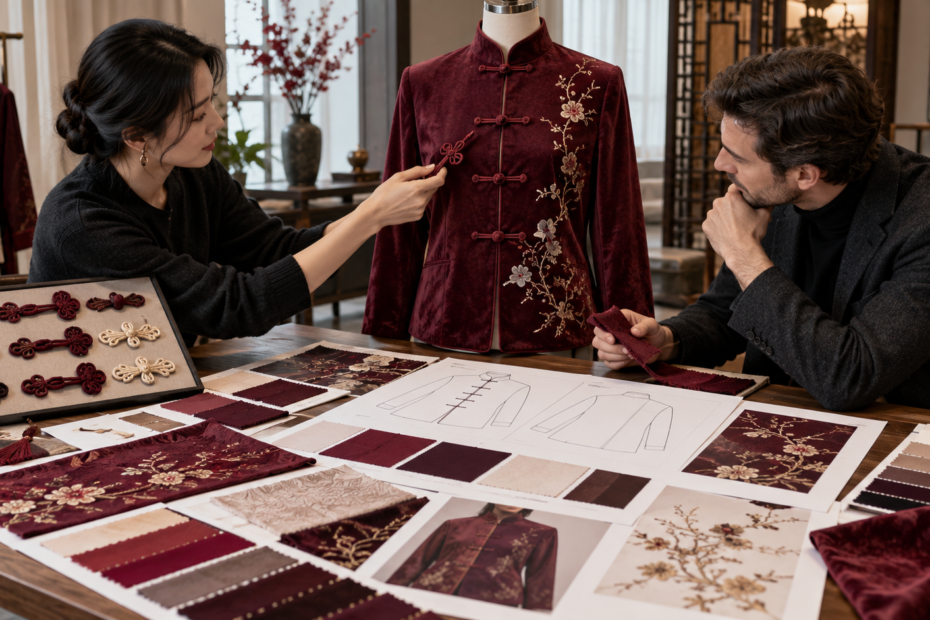
A custom Tang suit wholesale request must convert an idea into a controlled specification that a supplier can sample, price, produce, and inspect. Reference pictures are a starting point, not a complete tech pack. Define the users, quantity, design, measurements, materials, artwork, packaging, destination, and deadline.
State the commercial use
Explain whether the garments are for retail, staff, performance, a cultural institution, or an event. Include target customer, climate, movement, wear duration, price position, and expected reorder pattern. These factors affect construction choices.
Define every visible feature
Record silhouette, jacket length, collar, front opening, frog closures, sleeves, cuffs, pockets, vents, trousers, lining, trim, and decoration. Mark mandatory features and acceptable alternatives. Use dated files and identify the current version.
Specify materials without guessing
Describe required fiber content, fabric weight or hand, weave, lining, color reference, and performance needs. Ask the supplier to disclose proposed composition and substitutes. A photo cannot verify fabric, and “silk-like” is not a fiber specification.
Control sizing and grading
Provide finished-garment measurements or approve the supplier chart. Define points of measure, tolerances, wearing ease, sample size, and grading. Identify proportion needs that cannot be solved by scaling width alone.
Prepare artwork and branding
Supply embroidery, label, hangtag, and packaging artwork in the requested format. Specify dimensions, position, colors, orientation, and approval method. Confirm rights to use all marks and motifs. Ask about setup charges and minimum quantities.
Use staged samples
Clarify whether you need a design mockup, fabric swatch, fit sample, color sample, pre-production sample, or all of them. State what each stage approves. Bulk production should not begin until required decisions are documented.
Agree quality and variation
Set measurement tolerance, shade expectations, motif placement, workmanship criteria, inspection method, and remedies. Custom production still has variation; the buyer and supplier must define what is acceptable.
Build a realistic timeline
Work backward from the in-hand date through design confirmation, sourcing, sampling, revision, production, inspection, transit, customs, and distribution. Changes after approval can affect price and schedule, so record them formally.
Request a complete quotation
Ask for unit price, quantity breaks, MOQ basis, sample and setup costs, packing, freight scope, payment, quote validity, lead time, and exclusions. Compare quotes only after confirming they cover the same specification.
Review wholesale options, submit the brief through the contact page, browse the current shop, and visit Panda-Tang for company information.
 English
 Français