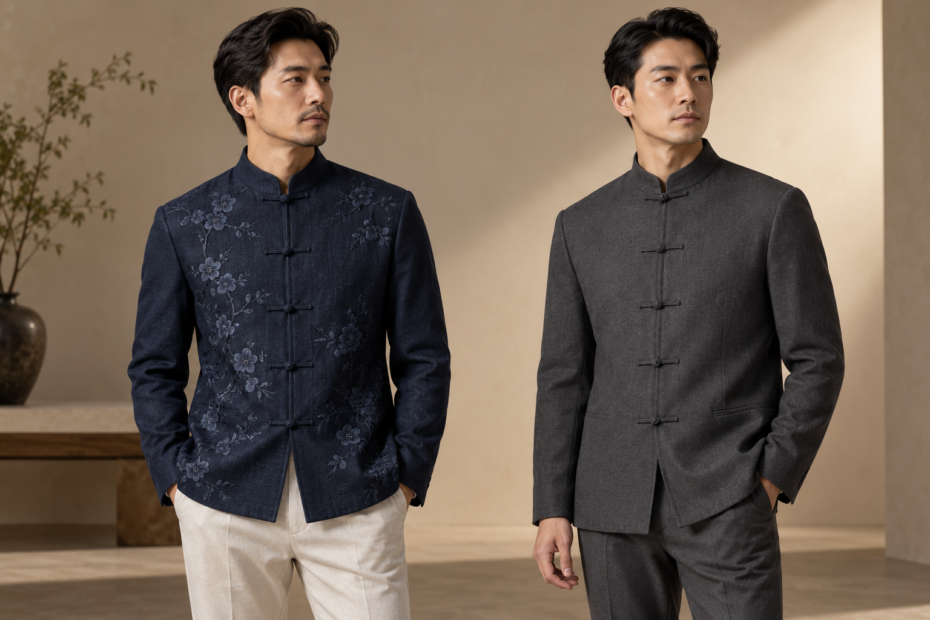
An embroidered Tang suit makes surface decoration part of the outfit’s message, while a plain Tang suit relies more on silhouette, fabric, and closures. Embroidery is not automatically more formal, and plain does not mean casual; construction, material, fit, and event context determine the result.
Define what is actually decorated
Embroidery may be stitched directly onto the fabric, applied as a patch, or combined with woven jacquard. Product descriptions sometimes use embroidered loosely, so inspect close photographs and confirm construction.
A plain jacket may still have tonal texture, contrast piping, decorative frogs, or a woven pattern. Compare the complete garment rather than only the marketing category.
Compare visual impact
Embroidery draws the eye toward its location, scale, contrast, and motif. Large high-contrast work becomes the main feature, while tonal stitching can remain subtle.
A plain jacket creates a quieter field in which the standing collar, closure spacing, and tailoring become more visible. It can also give accessories or a partner’s outfit more room.
Match the event
Embroidered styles can suit weddings, banquets, festivals, stage appearances, and cultural celebrations when the host welcomes decorative clothing. Plain styles can work across understated ceremonies, dinners, and smart-casual events.
Neither option replaces an explicit dress code. Ask before substituting a Tang suit where a conventional business suit, tuxedo, uniform, or specific ceremonial garment is required.
Do not assign meaning without evidence
Motifs can carry different associations across periods, communities, and designs. Do not assume a flower, animal, or geometric pattern has one universal meaning.
If symbolism matters to the occasion, confirm the motif with the seller and the relevant family or organizer. Otherwise describe it accurately as decoration rather than making a cultural claim.
Compare fabric, weight, and comfort
Dense stitching and backing can add weight or stiffness to selected panels. A plain jacket may feel lighter, although lining and base fabric can reverse that expectation.
Verify composition, lining, embroidery backing, stretch, and care. Wear the planned base layer and test reaching, sitting, and turning.
Evaluate placement and body proportions
Chest, shoulder, sleeve, and hem motifs interact with the wearer’s height and shape. Sizing up can move decoration away from its intended position even when the chest becomes comfortable.
Plain garments are visually more forgiving of proportion changes, but the collar, shoulders, and closures still need correct alignment.
Understand alteration limits
Embroidery near side seams, cuffs, shoulders, or hems can restrict tailoring because cutting through a motif damages the design. Moving closures may leave visible marks.
A plain jacket may be easier to alter, but lining, seam allowance, and construction still control what is possible. Ask a tailor before ordering a size that requires major changes.
Compare care requirements
Raised threads can snag on jewelry, bags, rough seating, and hook-and-loop fasteners. Metallic or multicolor work may have special cleaning limits.
Plain fabric can still be delicate or dry-clean-only. Follow the garment label, store closures fastened, and avoid pressing decorative surfaces directly.
Style the rest of the outfit
Keep trousers, shoes, and accessories restrained when embroidery is visually strong. Black or charcoal tailored trousers and simple dark shoes usually provide a stable base.
A plain Tang suit can accept one controlled accent, but the standing collar and frog closures already create a distinctive silhouette. Extra decoration is optional.
Consider rewear
Tonal or small-scale embroidery can offer a middle ground between statement and versatility. Bold contrasting work may remain associated with special events.
Plain black, navy, or charcoal is generally easier to restyle, but the best choice is the one that suits the wearer’s actual calendar and preferences.
Final decision checklist
- Confirm whether decoration is stitched, applied, or woven.
- Verify the motif and avoid unsupported symbolism claims.
- Check placement against the wearer’s proportions.
- Ask whether embroidery restricts alterations.
- Review cleaning and snag-prevention requirements.
- Try the full outfit in expected event lighting.
Choose embroidery when the event and wearer benefit from a deliberate visual focal point. Choose plain styling when clean lines, easy coordination, alteration flexibility, and wider rewear matter more.
Compare a detailed dragon-embroidery Tang suit with a softer bamboo-leaf casual Tang shirt. Browse the Panda-Tang shop, then visit Panda-Tang to verify current measurements, materials, care, stock, returns, and delivery.
 English
 Français