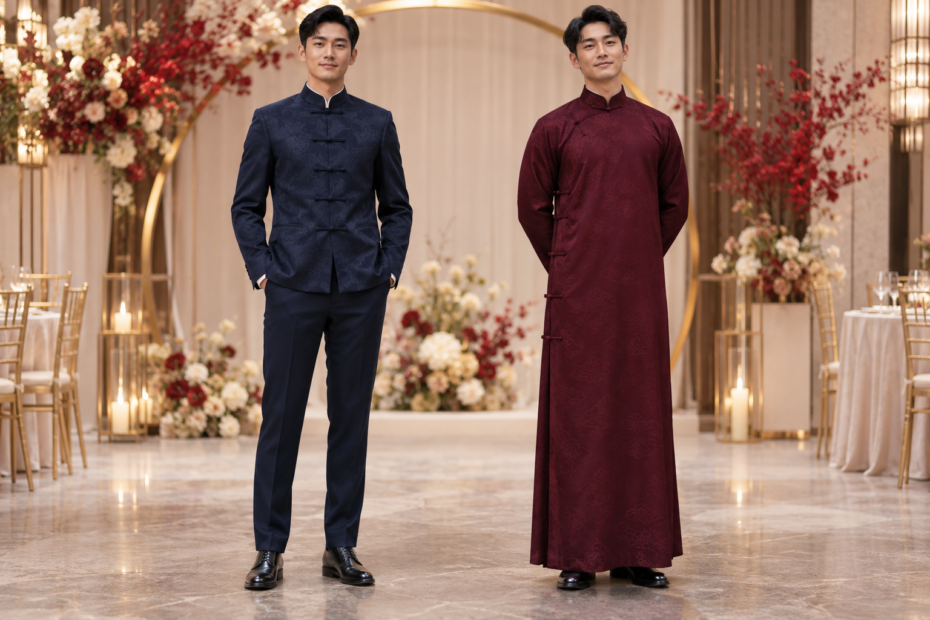
A Tang suit gives the groom or guest a shorter jacket-and-trouser silhouette, while a changshan creates a long, continuous robe-like line. Either can work for a wedding when the couple and families approve, but the wearer’s role, ceremony plan, venue, movement, and tailoring should determine the choice.
Understand the basic difference
The modern Tang suit is generally a hip-length standing-collar jacket with frog closures, worn with separate trousers. Retail usage varies, so inspect the actual construction.
Changshan commonly refers to a long men’s gown with a standing collar and side-fastening or asymmetrical details. Length, side slits, sleeves, and closure layout vary by design.
Ask the couple and families first
Wedding clothing expectations differ across families, communities, and ceremony formats. The groom may have a planned outfit, while fathers, attendants, and guests may be asked to coordinate differently.
Do not assume one garment is mandatory or universally more traditional. Approval from the people organizing the wedding is the most relevant guidance.
Compare visual formality
A structured brocade Tang jacket with tailored trousers can look polished and contemporary. It also transitions easily into a reception or mixed dress-code schedule.
A well-fitted changshan creates a more continuous and ceremonial silhouette. Its length gives it visual presence even when the surface decoration is restrained.
Consider the wearer’s role
A guest or attendant may prefer a quiet Tang suit that supports the wedding palette without becoming the main visual focus.
A changshan may suit a groom, father, host, or designated participant when its stronger silhouette is part of the plan. Guests should confirm before choosing a highly visible design.
Movement during the ceremony
A Tang suit is convenient for walking, sitting, serving tea, dining, and dancing because it uses ordinary trousers and a shorter hem.
A changshan requires correct slit placement, hem clearance, and stride allowance. Rehearse stairs, kneeling or bowing if applicable, sitting, and entering vehicles.
Venue and climate
A lightweight Tang jacket can work in warmer venues, while dense lining or brocade can still feel hot. Fabric and construction matter more than garment name.
A long changshan covers more of the body and may retain more heat, although material and lining vary. Check the venue temperature and outdoor schedule.
Color and motif coordination
Black, navy, burgundy, red, and other approved colors can work depending on the wedding plan. A shorter jacket makes trousers and shoes a larger part of the palette.
A changshan presents one large vertical field of color or pattern. Photograph samples beside the partner’s clothing and decor under venue-like lighting.
Fit and tailoring
Tang jackets need accurate shoulders, chest, midsection, sleeve, and back length. Frog closures should lie flat without pulling.
Changshan fit also depends on neck, chest, waist, hip, full length, sleeve, slit, and walking ease. Hem and decoration can make alteration difficult, so order early.
Shoes and accessories
Dark polished dress shoes are a simple formal choice with a Tang suit. Keep accessories restrained because the standing collar and closures already provide detail.
Choose footwear that remains appropriate under the changshan hem and supports safe movement. Avoid adding accessories with assumed symbolism unless the family has selected them.
Changing outfits
Some couples use one garment for a tea ceremony and another for the civil ceremony or reception. A Tang suit is easy to change into and coordinate with modern trousers.
A changshan may require more preparation and careful transport. Build changing time, garment care, and photography into the schedule.
Rewear after the wedding
A plain or tonal Tang suit can be reused at dinners, cultural programs, and celebrations. A changshan may have fewer casual settings but can remain valuable ceremonial clothing.
Rewear should not override the wedding plan. Fit, comfort, family approval, and the wearer’s confidence matter first.
Final decision checklist
- Confirm the couple’s and families’ expectations.
- Choose according to the wearer’s wedding role.
- Rehearse all required movement in the full outfit.
- Check venue climate and lighting.
- Allow time for tailoring and delivery.
- Verify care, included pieces, and return terms.
Choose a Tang suit for a modern, versatile wedding outfit with a shorter silhouette and easier movement. Choose a changshan when the wedding plan welcomes a long ceremonial profile and the wearer has the fit, time, and role to carry it comfortably.
Compare a detailed dragon-embroidery Tang suit with a softer bamboo-leaf casual Tang shirt. Browse the Panda-Tang shop, then visit Panda-Tang to verify current measurements, materials, care, stock, returns, and delivery.
 Français
 English