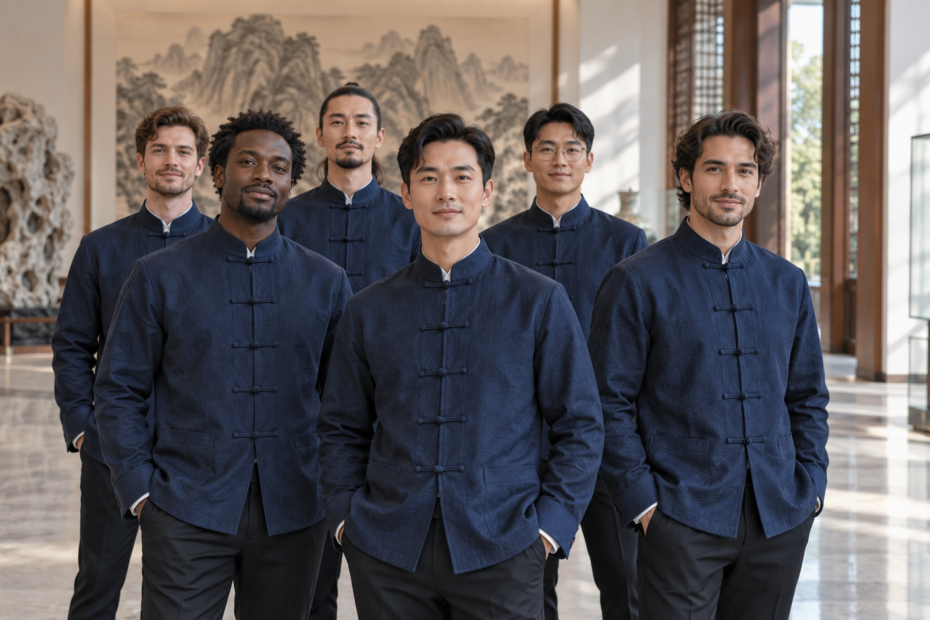
A successful Tang suit group order starts with a written specification, a representative size plan, and an approved sample before bulk production. Do not begin with color alone. The buyer should define the wearers, event, movement needs, quantity by size, delivery destination, and date when the garments must be ready—not merely shipped.
Write the use case
State whether the order is for staff uniforms, a cultural institution, choir, hosts, hospitality, retail resale, or a one-time ceremony. Include venue, climate, hours of wear, activity level, and desired formality. These facts guide fabric, lining, ease, pockets, closures, and care.
Freeze the design specification
Record jacket color, fabric, lining, collar, frog closures, sleeve, pockets, side vents, motif placement, trousers, labels, and packing. Attach dated reference images and identify which details are mandatory. A verbal description such as “traditional navy” is too ambiguous for consistent production.
Build a reliable size breakdown
Collect chest, waist or midsection, shoulder, sleeve, jacket length, hip, rise, and inseam as relevant. Confirm whether the supplier chart contains body or finished-garment measurements. Include wearing ease and identify outliers who may need custom proportions. Do not scale the entire order from height or usual letter sizes.
Approve a physical sample
The sample should use production-intent fabric, closures, decoration, and grading. Test it standing, sitting, reaching, and walking. Photograph color in daylight and event lighting. Record every approved measurement and correction; an informal “looks good” message is not a sufficient production record.
Define acceptable variation
Bulk garments can vary slightly in shade, measurements, and motif position. Agree in writing on tolerances and the method used to inspect them. Clarify whether fabric comes from one dye lot and how replacements will be handled. The supplier should not guess what the buyer considers acceptable.
Plan quality inspection
- Count units by style and size.
- Check measurements against the approved chart.
- Inspect collar symmetry, closure alignment, seams, lining, hems, and stains.
- Compare color and motif placement with the approved sample.
- Test representative closures and pockets.
- Verify labels, size marks, and packing lists.
Control schedule and logistics
Work backward from the in-hand date. Allow time for sample approval, production, inspection, international transit, customs, local distribution, exchanges, and rehearsal. Clarify Incoterms, shipment method, cartons, documents, duties, and who owns each deadline. Do not treat a production completion date as a guaranteed event-ready date.
Prepare replacements
Groups change. Order spare units in likely sizes when the event risk justifies it, and retain fabric or repair materials if possible. Decide how names, departments, or sets will be packed so distribution does not become another project.
Request a useful quotation
Send style, quantity, size breakdown, destination, required date, artwork, packaging, and sample expectations together. Review the Tang suit wholesale page, then use the contact page to submit the complete brief. Visit Panda-Tang for company information. A comparable quote should state what is included, excluded, and still awaiting confirmation.
 English
 Français