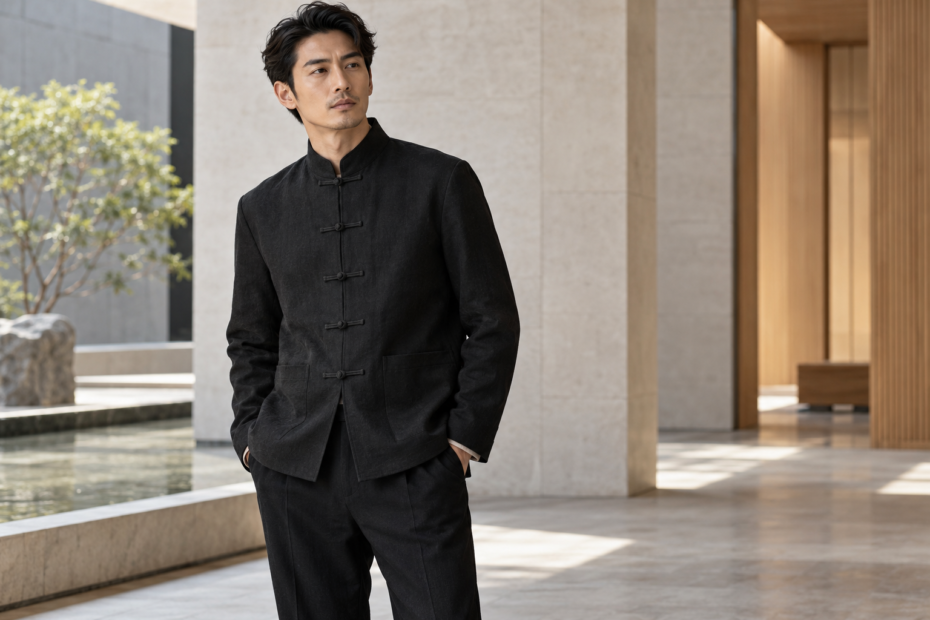
A modern Tang suit combines recognizable Chinese-style construction details with a silhouette, fabric and styling approach suited to present-day wear. It may retain a stand collar and frog closures while using a cleaner cut, quieter decoration, easier-care material or contemporary trousers.
Modern does not mean removing every traditional reference. It means choosing which elements carry the identity of the garment and adapting the rest to the wearer’s occasion, comfort and wardrobe.
Recognizable details create continuity
The stand collar and visible knot-and-loop fastenings are two of the strongest visual links between many Tang-style jackets. Because both details sit near the face and center front, they communicate the design even when the jacket has little or no embroidery.
A contemporary version may reduce the size or contrast of the closures. It may also use fewer decorative lines. The identity remains readable because the collar, opening and fastening rhythm still work together.
A cleaner silhouette changes how the jacket feels
Modern Tang suits often use a more streamlined outline than garments designed primarily for stage, ceremony or historical presentation. Shoulders may be softly tailored, sleeves may be narrower, and the body may finish around the hip for easier pairing with current menswear.
Streamlined should not mean restrictive. A jacket still needs enough ease through the chest, upper back and elbows. The best test is movement: fasten the garment, breathe normally, reach forward, bend the arms and sit. If the closure line pulls apart, a larger garment measurement or different cut may be more suitable.
Understated decoration supports everyday use
Decoration determines where the eye goes. Large contrasting motifs can make the jacket the centerpiece of an outfit. Tonal embroidery, narrow piping or plain fabric lets the collar and closures provide the main cultural reference.
Neither direction is inherently more modern. The practical distinction is versatility. A quieter jacket can move between dinners, cultural events and smart-casual settings with fewer changes to the rest of the outfit. A highly decorative jacket may be a stronger choice when the event calls for a clear statement.
Fabric influences drape more than labels suggest
Fabric affects structure, surface, temperature and care. A crisp textile can hold a sharp collar and straight front, while a softer textile creates a relaxed line. Shine increases visual formality but can also make creases and construction details more noticeable.
Do not identify fiber content from a photograph. Words such as silk, satin and brocade do not all describe the same thing, and online images cannot confirm composition. Use the material information and care instructions supplied for the exact garment. If those details are missing, treat them as unconfirmed.
Color helps set the social tone
Dark blue, gray, brown and black are usually easier to integrate with an existing wardrobe because they can be paired with neutral trousers and restrained footwear. Red creates stronger visual emphasis and is often selected for celebratory contexts, but the meaning of any color depends on the event, region and styling.
For a first modern Tang suit, begin with the occasion rather than a symbolic assumption. Ask whether the garment needs to photograph well at a wedding, remain comfortable during travel, or work for repeated dinners and cultural events.
Contemporary styling avoids costume effects
A modern Tang suit generally looks most natural when the surrounding outfit is simple. Straight or gently tapered trousers keep attention on the jacket. Clean leather shoes, minimalist sneakers or understated slip-ons can work depending on formality.
Avoid combining many competing cultural or decorative elements unless the occasion specifically calls for them. One strong garment usually needs fewer accessories. The result should look intentional rather than assembled around a theme.
Traditional and modern are not opposites
Tradition changes as garments move between generations, regions and uses. A jacket can respect recognizable Chinese design language while responding to present-day expectations for fit, care and styling. The useful question is not whether a garment is perfectly traditional or completely modern. It is whether its design choices form a coherent whole.
Panda-Tang’s dragon embroidery Tang suit presents a more decorative option, while the bamboo leaf casual Tang suit shirt provides a quieter comparison. Product availability, measurements and material details should always be checked on the current listing.
A modern Tang suit checklist
- The stand collar sits evenly and comfortably.
- The front line remains straight when every closure is fastened.
- The cut allows normal reaching, breathing and sitting.
- Decoration matches the intended occasion.
- Material and care information are confirmed rather than inferred.
- Trousers and shoes support the jacket instead of competing with it.
To compare current options, browse the Panda-Tang shop and use the Panda-Tang home page to check the latest collection.
 English
 Français